
How to Improve Employer Branding & Attract Top Talent
Discover how to transform your employer brand into a powerful tool for attracting and retaining top talent. Learn actionable strategies to define your Employee Value Proposition (EVP), enhance candidate experience, and foster a positive workplace culture that resonates with both current and future employees.

Your company has all the perks top-tier candidates look for: competitive salaries, great benefits, and the latest technology.
Yet, despite posting job openings left and right, the top applications just aren’t coming in.
What’s the missing link? The answer often lies in your employer branding.
A strong employer brand is not a new LinkedIn trend; it’s a critical factor in your company’s ability to attract and retain top talent. A robust employer brand strengthens your organization’s image and makes it more attractive to high-quality candidates. It directly influences employee satisfaction, engagement, and retention.
And the best part is that the benefits aren’t just limited to recruitment; they extend to your company’s overall culture, helping create an environment where employees feel motivated, valued, and excited to contribute.
In this guide, we will walk through actionable steps on how to improve employer branding. You will learn how to define your Employee Value Proposition (EVP), enhance the candidate experience, leverage employee advocacy, and more.
By the end of this blog, you’ll have a clear, step-by-step roadmap for transforming your employer brand into a powerful tool for attracting and retaining top talent.
Key Strategies to Improve Employer Branding
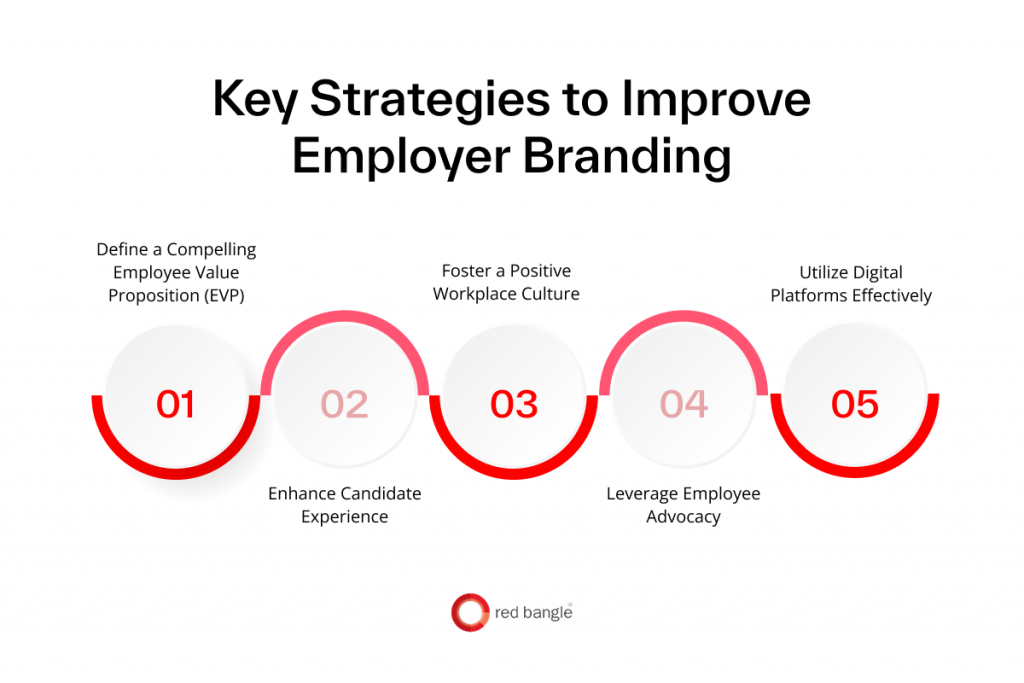
To improve employer branding, companies must focus on enhancing employee experience, aligning company values, and building a positive workplace culture. A strong employer brand attracts top talent, improves employee retention, and boosts job satisfaction.
Clear communication, employee advocacy, and leadership alignment play critical roles in shaping a company’s reputation. Companies that prioritize flexibility, sustainability, and inclusivity often stand out to job seekers.
By actively promoting these elements, businesses can create an authentic and engaging employer brand that resonates with both current employees and potential candidates.
1. Define a Compelling Employee Value Proposition (EVP)
A well-defined Employee Value Proposition (EVP) is the cornerstone of any successful employer branding strategy. Your EVP is essentially the promise you make to your employees about the experience they can expect when they work with you.
It’s a clear statement of the unique benefits and opportunities your company offers, and it reflects your organization’s core values and culture.
- Why is EVP so important?
In today’s job market, top talent is discerning, with nearly 75% of candidates evaluating a company’s reputation before applying, according to Market.biz.
Candidates are no longer looking for just a paycheck; they want an employer that aligns with their values, supports their growth, and offers meaningful work. Your EVP should highlight all these factors, differentiating your company from others in your industry.
- How to Create a Strong EVP:
- Understand Employee Needs: Start by gathering insights from employees through surveys, interviews, or focus groups. Understand what motivates them, whether it’s flexibility, career growth, or work-life balance. For instance, Salesforce emphasizes its “Ohana Culture” to prioritize employee well-being and inclusivity, reflecting its employees’ desire for a supportive work environment.
- Analyze Competitors: Look at your competitors’ employer value propositions. What are they offering, and how can you stand out? For example, HubSpot stands out by offering extensive learning and development opportunities, ensuring employees can grow their skills and careers within the company.
- Align with Company Values: Your EVP must closely align with your organization’s mission, vision, and culture. If your company is committed to innovation, your EVP should emphasize opportunities for creativity and cutting-edge projects. Google’s EVP, focused on “innovation and impact,” ensures employees know they are working on projects that make a real-world difference.
- Ensure Consistency: Ensure that your EVP is consistently communicated across all touchpoints, such as your career site, social media profiles, job ads, and employee interactions. Airbnb excels here by consistently promoting “belonging” and inclusivity, ensuring employees feel part of a global community aligned with their values.
A well-crafted EVP will resonate with the right candidates and create a sense of authenticity that helps attract the talent you want while retaining your existing workforce. Netflix’s focus on freedom and responsibility and Salesforce’s emphasis on employee well-being both show how a clear, consistent EVP strengthens company culture and talent attraction.
2. Enhance Candidate Experience
Candidate experience is one of the most critical components of employer branding. The journey a candidate takes, from first interaction with your brand to the final job offer, shapes their perception of your organization.
A negative experience, even during the hiring process, can deter top talent from applying to future openings or accepting your job offer, even if your offer is competitive. According to a report by Career Plug, 36% of candidates say they’ve declined offers due to negative interactions and impersonal interview processes.
- Steps to Improve Candidate Experience:
- Simplify the Application Process: Candidates should be able to apply easily without getting frustrated by lengthy forms or unnecessary steps. Offer a straightforward, easy-to-navigate application portal that enables candidates to apply with a few clicks.
- Clear and Timely Communication: One of the main complaints candidates have is poor communication during the hiring process. Make sure candidates know where they stand at each stage, even if it’s just to say that a decision is still pending.
- Personalize the Experience: Whenever possible, tailor your communications to candidates. A personalized message or a quick follow-up after an interview shows respect and reinforces a positive experience.
- Empower Recruiters: Employer-branding professionals note that giving recruiters branded materials and training boosts their ability to represent company culture authentically. It also helps candidates connect with your brand from the very first interaction.
- Provide Feedback: Constructive feedback is appreciated by candidates, especially those who didn’t make it to the next stage. Providing feedback shows that you value their time and effort, which can leave them with a positive impression of your company, even if they weren’t hired.
Improving the candidate experience not only boosts your reputation as an employer of choice but also increases the chances of successful hires. When candidates feel respected and valued throughout the recruitment process, they are more likely to share positive word-of-mouth. This, in turn, helps strengthen your employer brand.
3. Build a Positive Workplace Culture
Your company’s workplace culture is a major pillar of your employer brand. A positive, inclusive, and engaging work environment directly influences employee satisfaction, retention, and productivity.
It’s not just about perks like free lunches or game rooms; it’s about creating a culture where employees feel supported, valued, and motivated to do their best work.
- How to Build a Positive Workplace Culture:
- Promote Inclusivity and Diversity: A culture that values diversity and inclusivity attracts top talent from all backgrounds. Employees should feel that their contributions are valued, and diverse perspectives should be encouraged.
- Invest in Employee Development: Show your commitment to employee growth by offering opportunities for learning, career advancement, and personal development. This helps employees feel like they have a future with your company.
- Recognize and Reward Contributions: Regularly acknowledge employees’ hard work, whether through formal recognition programs or informal shout-outs. Recognizing achievements boosts morale and enhances your company’s image as a great place to work.
- Encourage Open Communication: Create an open environment where feedback is welcome, and employees feel comfortable sharing ideas, concerns, and suggestions. A transparent, communicative workplace builds trust and loyalty among employees.
When your company’s internal culture aligns with your external employer brand, you create a seamless experience for candidates, from the hiring process to their day-to-day work life. As Richard Branson, Founder of the Virgin Group, notes, “Clients do not come first. Employees come first. If you take care of your employees, they will take care of the clients.”
A positive workplace culture is contagious, and it can be your best asset in promoting a strong employer brand.
4. Leverage Employee Advocacy
Employee advocacy can amplify your employer brand in a way no marketing campaign can. Employees who speak positively about their experiences working for your company are some of your best brand ambassadors. Their authentic voices are far more credible than any corporate messaging.
- How to Encourage Employee Advocacy:
- Create a Positive Work Environment: The foundation of employee advocacy is a strong, supportive workplace. Employees are more likely to advocate for a company they believe in.
- Provide Social Media Training: Help employees share their experiences by providing guidance on how to represent the company on social media. Make sure they understand the dos and don’ts of sharing content about their work life.
- Incentivize Advocacy: Consider launching an employee referral program where employees are rewarded for recommending candidates. This not only boosts employee engagement but also helps attract top talent.
- Share Employee Stories: Encourage employees to share personal stories about their work experiences, which can be featured on company social media accounts, blogs, or the company website.
The power of employee advocacy is immense. Authentic testimonials and positive reviews from current employees can boost your company’s reputation as an employer of choice, improving your chances of attracting top talent.
5. Use Digital Platforms Effectively
Strong employer branding also means being transparent in how you present your company. Platforms like LinkedIn, Glassdoor, and Instagram offer unique opportunities to share your company’s culture, values, and successes with a global audience.
According to Totaljobs, 52% of candidates are more likely to dig into company performance and reviews before applying, so your online reputation and review management truly matter.
- How to Use Digital Platforms to Improve Employer Branding:
- Showcase Your Company Culture: Post behind-the-scenes content that gives candidates a peek into your workplace. Share photos, videos, or employee stories that highlight your company’s unique culture and work environment.
- Engage with Reviews: Actively manage your reputation on platforms like Glassdoor by responding to employee reviews—whether they’re positive or negative. This shows candidates that you care about employee feedback and are committed to improvement.
- Highlight Employee Benefits: Use social media to spotlight the benefits your employees enjoy, such as wellness programs, professional development opportunities, and flexible work options. This gives potential candidates insight into the perks of working with you.
- Leverage Social Proof: Share testimonials from employees who are passionate about your company. Their stories help humanize your employer brand and build trust with job seekers.
Digital platforms are an invaluable resource for amplifying your employer brand and reaching a wider audience of potential candidates.
A marketer shared that consistently posting employee stories on LinkedIn significantly expanded their company’s reach and made recruitment easier, as more applicants began following the company page, demonstrating how authentic social engagement can strengthen employer branding.
By showcasing real-life experiences, engaging with reviews, and highlighting company values, you can attract candidates who align with your mission.
Why Is Employer Branding Crucial for Your Organization?
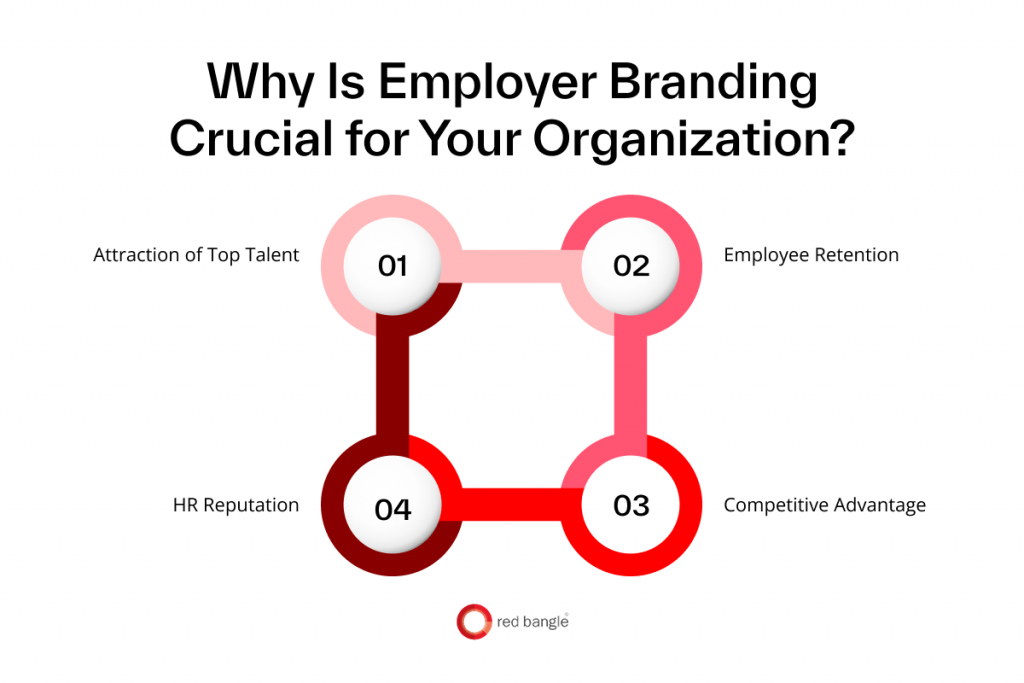
Employer branding is no longer just a “nice-to-have.” It’s an essential tool for staying competitive in today’s job market. Here’s why employer branding matters:
- Attraction of Top Talent: A strong employer brand helps you attract the best candidates. When higher-quality candidates see your company as a desirable place to work, they’re more likely to apply.
- Employee Retention: A positive employer brand also contributes to higher employee satisfaction and retention. When employees stay long-term, it improves organizational stability and reduces turnover costs.
- Competitive Advantage: Having a strong employer brand gives you an edge over competitors. In industries with a talent shortage, your brand reputation could be the deciding factor for top candidates deciding between offers.
- HR Reputation: Companies with a strong employer brand often receive higher ratings on review sites. A solid HR reputation makes your company a preferred employer and helps in attracting top talent.
Measuring the Success of Your Employer Branding Efforts
To ensure your employer branding efforts are on the right track, it’s essential to measure their success. Tracking key performance indicators (KPIs) helps you identify what’s working and what needs improvement.
Key Metrics to Track:
- Application Rates: A high number of applications can indicate a strong employer brand.
- Employee Retention Rates: Monitor how long employees stay with your company. Positive branding usually results in longer employee tenure
- Social Media Engagement: Track how often your content is shared and interacted with online.
- Brand Perception Surveys: Survey employees, candidates, and clients to gauge how your brand is perceived.
By analyzing these metrics, you can refine your employer branding strategies and continue to improve your company’s reputation.
Case Studies: Employer Branding Success in Action
When it comes to transforming employer branding into an authentic, human-centered experience, Red Bangle’s work demonstrates how the right blend of storytelling, design, and strategy can reshape how people perceive brands.
Case Study 1: Infosys “Know Your Recruiter” Series
Infosys identified a recurring problem across the hiring landscape: candidates often view recruiters as transactional figures rather than approachable partners. This perception created distance and made the hiring process feel impersonal. We set out to bridge that gap through storytelling that humanized the recruitment journey.
What we did:
- Created the “Know Your Recruiter” film series, featuring recruiters sharing their personal stories and professional philosophies.
- Focused on unscripted, conversational storytelling to reveal the personalities and empathy behind Infosys’s talent acquisition team.
- Avoided corporate formality, allowing real voices and natural expressions to shine through.
Impact:
- Candidates gained a transparent view of the company’s hiring culture, making Infosys feel more approachable and people-first.
- Recruiters became ambassadors of the company’s values, embodying its openness and empathy.
- The campaign strengthened Infosys’s overall employer brand by turning a formal process into a meaningful human interaction.
Watch the campaign:
Case Study 2: Hotel Superhero, Treebo
Treebo, a leading tech-enabled hotel chain in India, was ready to launch its in-house SaaS platform, Hotel Superhero, as an independent product. The challenge was to tell a story that resonated with both hotel owners and developers while distinguishing the platform in a crowded market of hospitality solutions.
What we did:
- Produced the “Hotel Superhero” film that combined real-world hospitality moments, candid interviews, and dynamic storytelling.
- Used founder-led narratives to explain the platform’s purpose while maintaining emotional authenticity.
- Focused on visual storytelling that showcases how technology empowers people, not just automates systems.
Impact:
- Reframed Hotel Superhero from being seen as “just software” to becoming a trusted partner for hotel owners.
- Established emotional credibility through genuine stories that reflected industry challenges and aspirations.
- Strengthened Treebo’s image as an innovator driving empowerment within the hospitality sector.
Watch the campaign:
These stories reflect Red Bangle’s belief that effective employer branding starts with human truth. By turning corporate goals into relatable narratives, we help organizations connect with talent and audiences in ways that feel genuine and lasting.
Learn more about our services to understand how we can help you, or reach out to our experts at Red Bangle. We’ll help you craft stories that inspire, engage, and build trust.
Conclusion
Building a strong employer brand isn’t an overnight process; it’s a journey that starts with self-awareness and a genuine commitment to people. From defining your EVP to refining candidate experience, fostering advocacy, and strengthening workplace culture, every step shapes how employees and job seekers perceive your company.
When done right, employer branding becomes more than a recruitment tool; it becomes a long-term business advantage that drives retention, engagement, and reputation.
At Red Bangle, we’ve seen firsthand how storytelling and strategy can bring employer brands to life. Whether it’s humanizing recruitment or turning a product story into an emotional connection, our approach focuses on what truly moves people: authentic stories, beautifully told.
If you’re ready to strengthen your employer brand, attract the right talent, and create a culture that reflects your values, we’d love to help. Book a strategy session with our experts at Red Bangle, and let’s build an employer branding strategy that inspires, connects, and grows with your organization.