
Employer Branding Content: Best Practices for 2026
Employer branding content is more than just job listings, it’s the story of your company’s culture, values, and mission. Learn how to create authentic, engaging content that attracts top talent by showcasing real employee experiences, leadership values, and your company’s unique environment.

You’ve filled open roles before. You know how it goes: job postings go live, resumes come in, and interviews begin. But lately, something feels different.
The right candidates aren’t applying, or they’re slipping away just before the offer stage.
The roles are good, the compensation is fair, and the company culture is strong. So why isn’t that message landing?
Chances are, the problem isn’t what your company stands for. It’s how you’re showing it.
That’s where employer branding content comes in.
By aligning your branding with the true essence of your company, you can overcome this disconnect. It’s the bridge between what you believe as a company and what candidates perceive from the outside. It shapes how people talk about you long before they meet your team or step into your office.
The truth is, most organizations underestimate how much storytelling influences hiring decisions.
People don’t apply to companies. They apply to the stories that reflect their own ambitions, values, and sense of purpose. When your content captures that truth, through real employee voices, authentic visuals, and clear values, it stops sounding like marketing and starts feeling like belonging.
This guide explores how to build that connection through employer branding content, the kind that attracts talent, builds trust, and turns employees into advocates for your brand.
What is Employer Branding Content?
Employer branding content refers to the materials and strategies used to communicate a company’s culture, values, and employee experience. It showcases an organization’s unique environment, helping to attract top talent and retain current employees.
This content includes a mix of written posts, social media updates, videos, and testimonials, reflecting authentic employee experiences and organizational values. Effective employer branding content builds trust, promotes company culture, and differentiates a business in a competitive talent market.
It engages potential hires by aligning with their expectations for work-life balance, growth opportunities, and a transparent, inclusive culture.
If you’re still aligning your leadership and talent teams on the “why” behind employer branding, explore our detailed guide on Why Is Employer Branding Important in 2025? for the strategic impact and business case of a strong employer brand.
Key Components of Effective Employer Branding Content
Employer branding content plays a critical role in shaping how potential employees perceive your company. It’s not just about highlighting job openings. It’s about communicating who you are as an employer, what values you stand for, and why someone should choose to work with you over competitors.
This is where your Employer Value Proposition (EVP) plays a pivotal role in setting you apart.
1. Employer Value Proposition (EVP)
The Employer Value Proposition (EVP) is the foundation of your employer branding content. It defines what sets your company apart from others and why employees should want to join (and stay with) your organization.
An EVP articulates the unique benefits that employees can expect, such as career development opportunities, a competitive salary, a supportive work culture, work-life balance, and meaningful work. A compelling EVP serves as the bedrock upon which all other employer branding content is built.
A strong EVP helps attract talent by directly addressing what job seekers value most. This might include career growth opportunities, flexible work arrangements, or a commitment to innovation and leadership in your field.
To make an impact, your EVP should be consistently reflected across all content, from job descriptions and social media posts to employee testimonials. This ensures that potential candidates clearly understand your company’s core appeal.
Key Aspects of EVP (Employer Value Proposition)
An effective EVP communicates the unique benefits and values that an organization offers to its employees. It plays a crucial role in attracting and retaining top talent by aligning company culture, values, and career opportunities with employees’ personal and professional goals.
Here are a few critical aspects of an effective EVP:
Career Development Opportunities
Career development opportunities are crucial to an EVP because employees seek workplaces where they can grow professionally.
Employees who perceive their employer as invested in their growth are more likely to stay long-term.
In fact, career development can be a key deciding factor for candidates when choosing between multiple job offers. By offering a clear career progression path, your company shows that it cares about the personal and professional development of its employees.
A strong example of this comes from Infosys’s Leadership Series by Red Bangle, which features a day in the life of a VP of Sales. In the video, the leader shares his 12-year journey within the company, walking viewers through how he began, the growth opportunities he embraced, and how Infosys’s culture supported his professional evolution.
The narrative revolved around demonstrating what sustained growth, mentorship, and trust look like inside the organization.
What makes this content particularly effective is how it blends storytelling with an employer branding strategy. Candidates get a transparent look into the company’s work environment, the kind of leadership development available, and the long-term potential for growth.
At the same time, existing employees see a reflection of their company’s values in action, including commitment, perseverance, and opportunity.
By showcasing stories like these, organizations can inspire potential hires. These stories reinforce the idea that career progression is a lived experience supported by the company’s culture and leadership philosophy.
Work-Life Balance
As the demand for flexible work arrangements continues to grow, work-life balance has become an essential aspect of an EVP. A strong work-life balance increases employee satisfaction, reduces burnout, and helps retain top talent.
According to a 2023 Gartner survey of nearly 3,500 job candidates, 45% candidates cited “better work-life balance” as a top reason for accepting a job offer. This shows how deeply flexibility and personal well-being influence career decisions today.
Companies that offer flexible working arrangements are more likely to attract a diverse and dynamic workforce. Employees value the ability to balance personal and professional commitments, which enhances both engagement and productivity.
Company Culture and Values
The core values and culture of your company are at the heart of your EVP. These values should permeate all aspects of your employer branding content. A strong company culture not only attracts talent but also keeps employees engaged and motivated.
Company culture shapes how employees feel about their workplace. A positive, inclusive, and transparent work culture fosters employee satisfaction, loyalty, and productivity. Additionally, when potential candidates see that your company’s culture aligns with their own values, they are more likely to apply and engage with your organization.
Meaningful Work
An EVP should reflect how employees’ roles align with the company’s mission and vision.
Employees who find meaning in their work are more motivated, productive, and engaged. When employees believe in the mission of the company and understand how their work contributes to that mission, they are more likely to stay long-term and become advocates for the company.
A powerful example of this alignment between purpose and storytelling can be seen in Treebo’s recruitment film created by Red Bangle. The film narrates the story of Treebo, including how it began, the problem it set out to solve, and the vision driving its mission.
Through the voices of its three founders, viewers are walked through the company’s journey, the challenges they faced, and the innovative solutions they built to bring consistency and trust to budget hospitality.
What makes this film stand out is how it conveys purpose not through corporate jargon but through authentic storytelling. It gives candidates and employees alike a deeper sense of why Treebo exists and how their roles contribute to a larger mission.
By visually showing the problem and solution, the film transforms abstract values like innovation, consistency, and customer trust into something tangible and emotionally resonant.
When organizations showcase their mission and vision this way, they don’t just tell people what they do. They help them see the difference their work makes. That’s the essence of meaningful work in action.
Leadership and Management
Strong leadership is a critical aspect of an EVP. The leadership team sets the tone for the company’s culture and values. When leadership is transparent, empathetic, and supportive, it fosters trust and engagement within the organization.
Effective leadership helps create a positive work environment where employees feel supported and valued. Strong leaders provide direction, encourage professional growth, and make employees feel like integral parts of the organization. When candidates see that a company has strong leadership, they are more likely to be attracted to the organization.
2. Leadership Voice & Thought Leadership
The leadership team plays a crucial role in influencing your company’s employer brand. Employees and potential candidates are more likely to trust and engage with a company that has leaders who communicate openly.
This leadership voice can be channeled through various channels, including blog posts, social media interactions, videos, podcasts, and webinars. Each of these platforms helps build trust and credibility, further strengthening your employer brand.
One of the most important aspects of leadership content is positioning your organization as an industry thought leader. When your executives contribute insights or participate in discussions about the future of the industry, it elevates your company’s reputation.
Thought leadership content demonstrates that your company is forward-thinking, credible, and committed to continuous improvement and innovation.
3. Employee Advocacy
When employees actively share their positive experiences, they act as authentic ambassadors for your company. Employee advocacy occurs naturally when employees feel connected to the company’s mission and culture, and they are more likely to promote your organization voluntarily.
Whether through social media, testimonials, or personal recommendations, employee advocacy increases the credibility of your employer branding content.
Encouraging employees to share their experiences not only builds transparency but also increases trust with potential candidates. Job seekers tend to trust peer insights over corporate messaging, making employee-generated content one of the most valuable forms of employer branding.
A great example of authentic employee advocacy in action is Infosys’s Employee Stories Series by Red Bangle. In one of these films, Antonia Rizaku shares her personal journey at Infosys, from her challenges and learning opportunities to the professional growth she’s experienced along the way.
Her story captures what it truly means to work in a culture that values continuous learning and encourages employees to embrace mistakes as part of the growth process.
Through candid storytelling, this series allows employees to speak for themselves, showing how Infosys nurtures its people through mentorship, learning programs, and a supportive environment.
For potential candidates, this transparency paints a genuine picture of what working at Infosys feels like. For existing employees, it reinforces pride and belonging, reminding them of the company’s commitment to their development.
Stories like these transform employer branding from a marketing initiative into a shared experience, driven by the voices that matter most, its people.
4. Employer Brand Tone
The tone of your employer branding content is a critical factor in shaping how your company is perceived by both current employees and potential candidates. Your brand tone sets the emotional backdrop for your content and plays a significant role in communicating your company’s personality.
Whether your tone is professional, friendly, innovative, or laid-back, it should consistently reflect the values and culture of your organization.
A consistent tone helps reinforce your employer brand and ensures that your content resonates with the right audience.
For example, if your company values creativity and flexibility, a more relaxed and casual tone may be appropriate. On the other hand, if your company is known for its professionalism and leadership in the industry, a more formal and authoritative tone may be more fitting.
To be successful, your employer branding content must be authentic, consistent, and aligned with your company’s mission. When done right, it not only attracts top talent but also cultivates a loyal and engaged workforce that believes in your company’s values.
Content Formats for Employer Branding

By communicating your company’s culture, values, and employee experiences through diverse content formats, you are more likely to engage potential candidates and retain current employees.
1. Blog Posts and Articles
Blog posts allow you to tell compelling, long-form stories about your organization. They highlight what it’s like to work at your company by diving into employee development programs, exploring company-wide initiatives, or focusing on diversity. When well-crafted, blog posts create a strong platform for sharing meaningful content.
From an SEO perspective, long-form blog content provides an opportunity to rank for multiple keywords. It allows you to address various aspects of employer branding content and cover relevant topics in depth. Additionally, long-form content helps build authority in your industry, which improves search visibility over time.
To maximize the effectiveness of blog posts, make sure the content is consistent, easily shareable, and integrates relevant keywords that job seekers are likely to search for. This helps you stay top-of-mind when potential candidates are researching company cultures or job opportunities.
2. Social Media Posts
Social media offers the perfect platform for sharing bite-sized content that is visually appealing and easy to digest. It’s an ideal way to showcase your company culture, especially for job seekers who value transparency and authenticity.
Posts can range from behind-the-scenes snapshots, employee spotlights, highlights of company events, or updates on initiatives that align with your company’s mission and values.
Social media posts humanize your employer brand, offering a real-time look into your workplace. This is particularly effective for connecting with younger generations, such as Millennials and Gen Z, who are highly active on social media and often prioritize company culture over salary when considering new job opportunities.
Ensure that your social media posts are consistent in tone and align with your overall employer branding strategy. Engage with users by responding to comments and encouraging employees to share their authentic experiences online. This fosters a two-way dialogue, building trust and credibility.
3. Videos and Webinars
Videos and webinars are powerful tools for bringing your employer brand to life. Unlike written content, video offers a more dynamic, engaging format that can capture the attention of potential candidates quickly.
Through videos, you can showcase your company’s values, highlight employee stories, and give job seekers a tangible sense of your workplace culture. Videos offer a visual and emotional experience that written content simply can’t match.
For example, office tours, “day-in-the-life” segments, and interviews with employees provide rich insights into your organization, helping to build excitement and engagement.
Webinars, on the other hand, are an excellent platform for engaging with an audience in real-time. They allow leadership and employees to discuss topics like professional growth, company culture, and industry trends. Additionally, webinars provide an opportunity to answer questions from potential candidates.
This real-time interaction creates a more personal connection and demonstrates transparency.
For a structured, step-by-step walkthrough of planning, scripting, producing, and measuring impactful employer branding videos, check out our Employer Branding Video Guide: Process and Examples.
When creating videos, prioritize storytelling. Focus on real employees, their growth within the company, and their experiences. This authentic approach resonates more with job seekers than corporate-speak or overproduced content.
4. Podcasts
Podcasts are an increasingly popular medium for sharing in-depth insights into company culture, leadership philosophy, and industry trends.
This content type provides a platform to share stories and insights in a more informal, digestible format. They are particularly popular among Millennials and Gen Z, who value authenticity and the opportunity to hear from employees, leaders, and industry experts.
Podcasts allow companies to delve deeper into topics that matter to job seekers, such as employee well-being, workplace culture, and career development.
In addition to attracting potential candidates, podcasts can also help position your organization as a thought leader in your industry. By featuring leadership discussions or interviews with experts, podcasts give your company credibility and demonstrate that you value knowledge-sharing.
Consistency is key when it comes to podcasts. Release episodes on a regular basis and invite a mix of internal employees, leadership, and external industry experts to maintain listener engagement.
5. Newsletters
Newsletters are an excellent format for employer branding because they offer a direct, personalized way to keep both current employees and prospective candidates engaged. These email updates allow companies to share company news, employee stories, and updates on open roles or upcoming hiring events.
Newsletters help to keep your employer brand top of mind. By regularly sharing updates and insights, you demonstrate that your company is active, innovative, and committed to maintaining an engaged workforce.
Newsletters can also be used to highlight company achievements, promote diversity and inclusion efforts, or offer sneak peeks into internal projects. This helps keep your audience engaged long after they’ve visited your career page.
Keep newsletters informative, concise, and relevant to your audience. Use them as an opportunity to share employee success stories, upcoming events, and company updates, while also integrating open job positions. This turns your newsletter into both a tool for keeping employees engaged and a valuable recruitment resource.
Whether you’re highlighting a “day-in-the-life” through video or engaging with candidates via a podcast, consistency is key. Authenticity across all formats will help your employer branding content resonate with your audience.
To succeed, remember that employer branding is a long-term investment. Each piece of content should align with your company’s mission and values, offering candidates a genuine, transparent view of what it means to work at your organization.
Best Practices for Creating Employer Branding Content
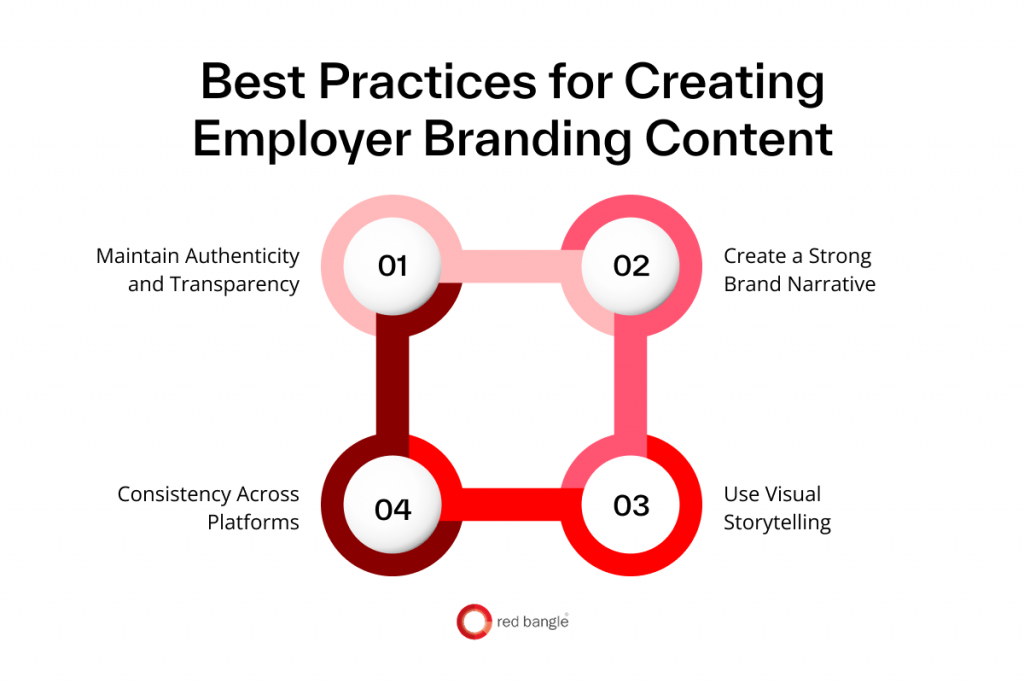
Effective employer branding content is the cornerstone of attracting top talent and cultivating a positive image for your company. It goes beyond simply showcasing job openings or products.
It’s about telling an authentic story that connects with your audience. Whether you’re a startup or a multinational corporation, creating impactful and engaging employer branding content requires a strategic approach.
1. Maintain Authenticity and Transparency
When companies make promises they can’t keep, new hires may feel disappointed by the reality of the workplace. Authentic content not only avoids this pitfall but also creates a sense of alignment between your company and prospective employees.
For example, if your company emphasizes work-life balance but fails to provide it, candidates will quickly see through the messaging and look elsewhere.
To maintain authenticity, ensure that the content reflects the real experiences of your employees. Use genuine employee testimonials, showcase real employee stories, and provide a true representation of your workplace culture, not just idealized versions.
For exaxmple, Zyeta’s Employee Advocacy Video produced by Red Bangle, brings together voices from across teams, including designers, engineers, and project managers, sharing their experiences, what they enjoy most about their work, and even the challenges they face and embrace.
Through an interview-style format, employees speak candidly about the culture of creativity, inclusion, and collaboration that defines Zyeta. The film also highlights moments of innovation and sustainability that underscore the company’s purpose-driven approach.
By focusing on real stories rather than scripted narratives, Zyeta built an employer brand rooted in transparency and trust, showing potential candidates exactly what it means to work there.
This kind of storytelling helps prospective employees connect emotionally with a brand, while giving current team members a sense of pride in seeing their authentic experiences represented. It’s a reminder that the most compelling employer branding content doesn’t just say who you are. It shows it through the people who live it every day.
2. Post Consistently Across Platforms
When job seekers research your company, they’ll likely encounter your brand on various platforms. If your content feels disjointed or presents conflicting messages, it can lead to confusion and may even deter top talent.
A consistent approach helps potential candidates understand what to expect from working at your company and strengthens your image.
Ensure that your brand’s core values, tone, and visual identity remain consistent across all channels. Whether a potential candidate is reading a job description, browsing your social media, or watching a company video, the messaging should align with the overall image you want to project.
3. Use Visual Storytelling
People process visual content faster and more effectively than text. When job seekers can see themselves in your company, they are more likely to feel connected to your brand. Visual content allows you to communicate complex ideas in an easily digestible format, from showcasing company events to highlighting your work culture.
Use a mix of high-quality visuals that reflect real experiences at your company. Feature images or videos of your employees at work, during company events, or even in casual settings to humanize your brand. This helps potential candidates get a sense of the work environment and your company’s values in action.
4. Create a Strong Brand Narrative
A strong narrative emotionally connects with potential employees and gives them a reason to care about your company beyond just the paycheck. It allows you to communicate your company’s mission, values, and impact in a meaningful way. This approach resonates with job seekers on a personal level.
Candidates want to work for a company that shares their values and provides a sense of purpose.
Your employer brand narrative should remain consistent across all content types. Whether through blog posts, videos, or social media, the underlying message must communicate your company’s mission and vision. It should also highlight how employees make an impact. Show potential candidates how they can contribute to this larger narrative.
Ultimately, successful employer branding is about telling a compelling and truthful story that attracts talent, fosters trust, and builds lasting relationships with your workforce.
To elevate your employer branding efforts, focus on content that connects emotionally with your audience while remaining true to your company’s values.
Conclusion
What makes someone choose your company when the roles, perks, and pay all look the same?
The answer lies in emotional connection rather than costly campaigns. People don’t join companies. They join stories that feel real.
Employer branding content is where that story comes alive. It turns corporate culture into a living experience, something candidates can see, feel, and believe in. It transforms leadership vision into lived moments, and it gives potential hires a glimpse into what their own story could look like inside your company.
Authenticity is not built through glossy campaigns or clever copy.
It’s built through:
- Vulnerability: Sharing not just the wins, but the challenges that shape who you are as an organization.
- Growth: Showcasing the journey, including how people evolve, learn, and lead within your company.
- Everyday Moments: Capturing the real, unfiltered experiences that make your culture tangible.
Ask yourself:
- Do our stories show the heart behind our brand or just the highlights?
- Would a candidate see themselves in our content?
- Are we telling stories that build trust, not just attention?
When you answer “yes” to those questions, that’s when your employer brand becomes magnetic, not because it’s perfect, but because it’s human.
If you’re exploring partners who can help you scale this, we’ve curated Employer Branding Companies: Top Picks for 2025 to help you understand what to look for in a strategic content and video partner.
Ready to transform how talent sees your brand?
Book a personalized call with Red Bangle. We’ll analyze your current assets, identify storytelling gaps, and outline a strategy to build authentic, high-impact employer content that attracts and retains top talent.